The Choose What Works framework and how to choose your next strategy
The Choose What Works framework was developed specifically to address the gap between the strategies the business world promotes and the strategies that are actually appropriate for a given entrepreneur at a given stage.
The framework does not prescribe a single path. It does not tell you which strategy to use. It gives you a process for identifying which strategies are genuinely appropriate for your stage, skills, capacity, and context and then choosing one from that filtered set rather than from the full universe of available options.
The process has three steps.
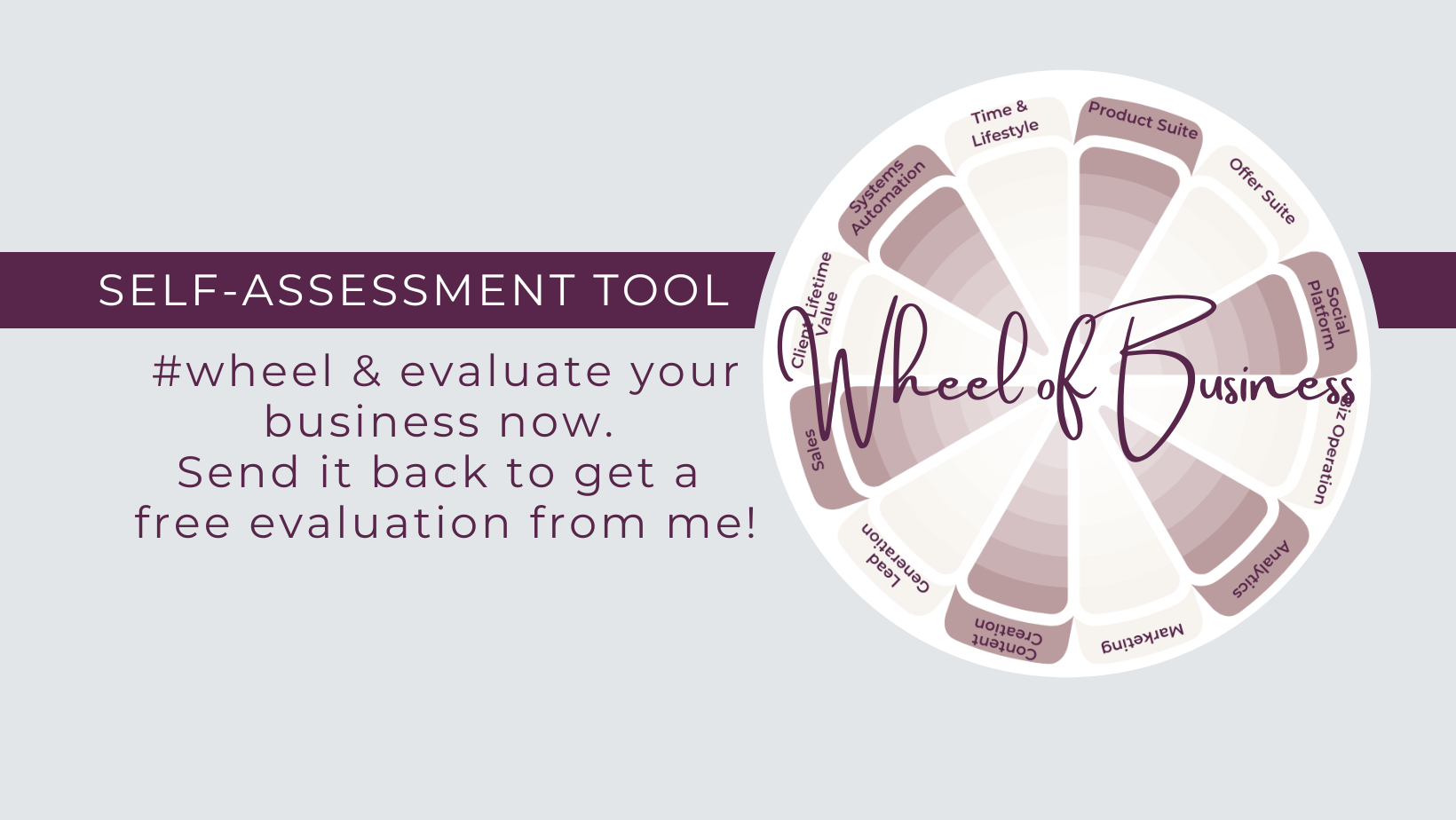
Step 1 — Map your current stage. Before evaluating any strategy, complete an honest assessment of where your business actually is. The Wheel of Business diagnostic (Post 4 in this series — details at femmefortea.com/wob) is the recommended tool for this. The goal is to see the business as a system — which areas are developed, which are still being built, and which single area, if strengthened, would create the most movement across the rest.
Step 2 — Run every strategy candidate through the five filters. The five filters are the diagnostic heart of the Choose What Works framework. They prevent the most common mistake: choosing a strategy based on what worked for someone else rather than what fits your specific context. Every strategy you are considering - whether it is a new content approach, a new offer structure, a new sales process, or a new platform - should be evaluated against all five filters before you commit time, energy, or money to it.
Step 3 — Choose one. Not three. Not the most ambitious one. The one that passes all five filters and feels genuinely possible - not aspirationally possible, but actually possible from where you are right now. Implement that one fully before evaluating the next.
The impulse to implement multiple strategies simultaneously is one of the patterns the Business Trauma Loop feeds on directly. Hope arrives, effort expands to fill everything available, the complexity becomes unsustainable, and the cycle restarts. One strategy, fully implemented, is how the loop gets interrupted at the structural level.